Church Operations·4 min read
Your Volunteers Aren't the Problem. Your System Is.
A volunteer spends weeks preparing something for the church. It never gets used. W. Edwards Deming said a bad system will beat a good person every time. Dr. Merrilyn Yeboah explains what that means for the church and what to do about it.
May 11, 2026 · Dr. Merrilyn Yeboah
Picture this.
A volunteer in your church spends hours preparing something. A resource, a process, a plan for a ministry area. They are motivated and gifted and they genuinely want to serve. They finish it and hand it in. And then nothing. It never gets used. No one follows up. The work disappears into a folder or an inbox and eventually everyone forgets it existed.
That volunteer did not fail. The system did.
The problem is rarely that people do not want to help. Most volunteers genuinely do. They said yes. They meant it. But wanting to do something and actually doing it consistently are two different things. In behavior analysis, motivation is not just desire. It is the set of conditions that make a behavior more or less likely to happen in the moment. A volunteer can have every intention to serve and still not follow through if the process is unclear, the role is vague, nobody followed up after they said yes, or the work they gave last time seemed to disappear without anyone noticing. The effort was too high. The reinforcement was too low. The environment did not support the behavior. That is not a people problem. That is a system problem.
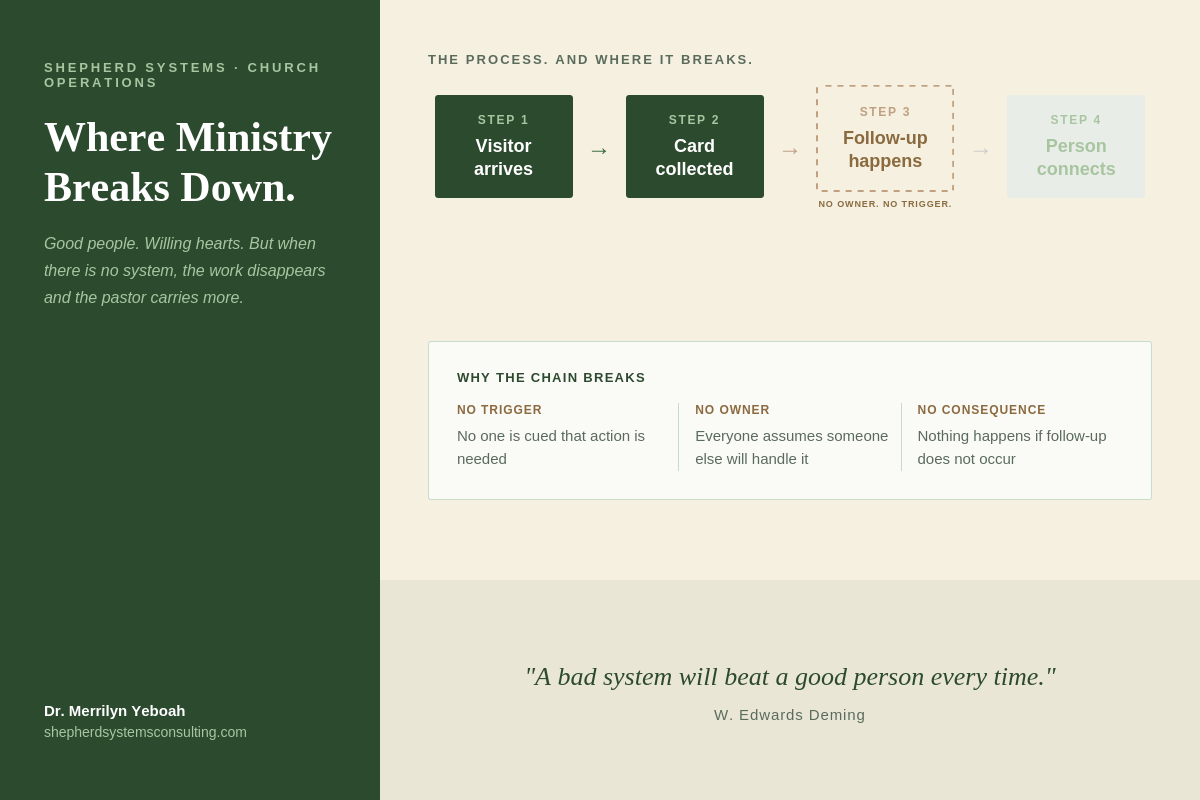
W. Edwards Deming, the man widely credited with transforming post-war Japanese industry into one of the most formidable economies in the world, said it plainly: “A bad system will beat a good person every time.”
He was not saying good people do not matter. He was saying something more uncomfortable. When a system is broken, even your best people cannot outperform it. Their effort goes in and the system swallows it.
I have seen this play out in churches more times than I can count. And it grieves me every time. Because the people involved are not apathetic. They are passionate. They love God and they love the church. They want to help. The system just has no way of receiving what they are offering.
We are being destroyed by best efforts. - W. Edwards Deming
What a bad system actually costs
We talk a lot in the church about stewardship. We preach about it. We teach tithing. We ask people to give their time, their gifts, their resources.
But here is a question we rarely ask. Once people give those things, does the church have a system that actually stewards them?
When there is no system in place, a volunteer's time is not stewarded. It is wasted. The hours they gave preparing that resource, building that process, drafting that plan, gone. Not because they failed to do the work. Because the church had no structure to receive it, use it, or sustain it.
The same is true of financial giving. Money flows into a ministry area with no clear owner, no defined process, no accountability for how it gets used, and the impact is a fraction of what it could be. Not because the funds were not there. Because the infrastructure was not.
A church without systems is not just disorganized. It is a stewardship problem. God's people are giving their best and the church is not positioned to receive it well.
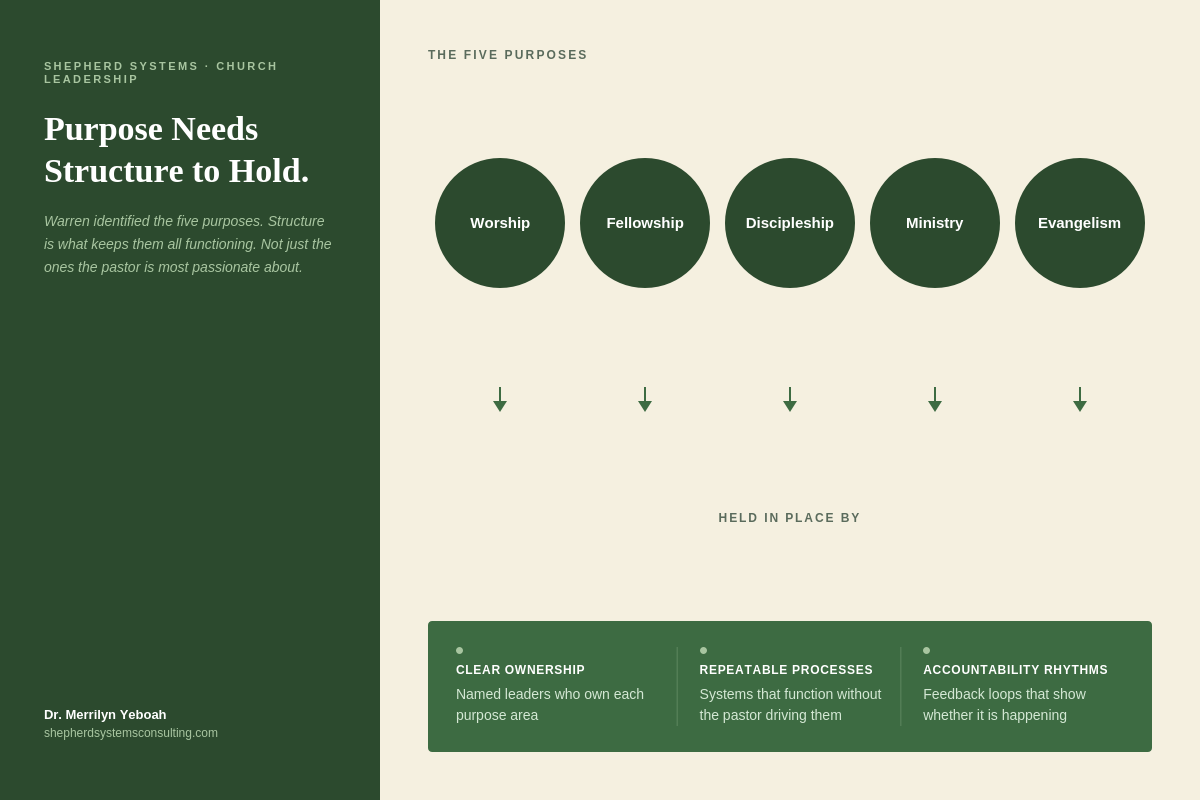
The issue is never the willingness of the people. It is almost always the absence of a structure that can hold what they are offering.
What happens to the people inside a broken system
Deming's point was never that people should give up. It was something harder to hear. Trying harder inside a broken system does not fix the system. It often makes things worse. You burn through your best people. You exhaust the ones who care most. And eventually they stop.
I have watched it happen. A volunteer pours themselves in. Their work goes nowhere. They try again. Still nothing. They start to wonder if their contribution matters. They pull back. Not out of laziness but out of a reasonable conclusion: what is the point?
And the painful irony is that the pastor often reads that withdrawal as disengagement. As a lack of commitment. As a people problem. When in reality it is the system doing exactly what Deming said it would. Beating a good person, slowly, over time.
Meanwhile the pastor keeps carrying the load that was supposed to be shared. Because the work that was handed off never had a home to land in. So it routes back. And the cycle continues.
This is not a motivation problem. It is a design problem.
The hardest part of Deming's insight is accepting that the problem is structural, not personal. It is easier to conclude that people are not committed or not stepping up. It is harder and more honest to ask: have we built a system that makes it possible for them to succeed?
In a church context, that question sounds like this. When a volunteer completes a piece of work, is there a clear owner who receives it and knows what to do with it? When a new initiative is handed off, is there a defined process for how it gets implemented and sustained? When someone gives their time, is there a structure that ensures it connects to something that actually moves forward? When work falls through the cracks, is the honest answer that no one was set up to catch it?
If the honest answer to most of those is no, the system is not built to receive what people are giving. And no amount of encouragement, re-engagement, or sermon series on serving will fix that. You have to fix the structure.
You cannot motivate your way out of a structural problem.
What it looks like when the system works
When a church has clear systems in place, something shifts. The volunteer who prepares something knows exactly where it goes, who reviews it, and how it will be used. The initiative that gets handed off has a named owner and a process for keeping it alive. The work that was given in faith is actually received and built upon.
People stop repeating themselves. They stop rebuilding the same thing from scratch every six months because last time it disappeared. They start to see that their work matters, because it connects to something that persists.
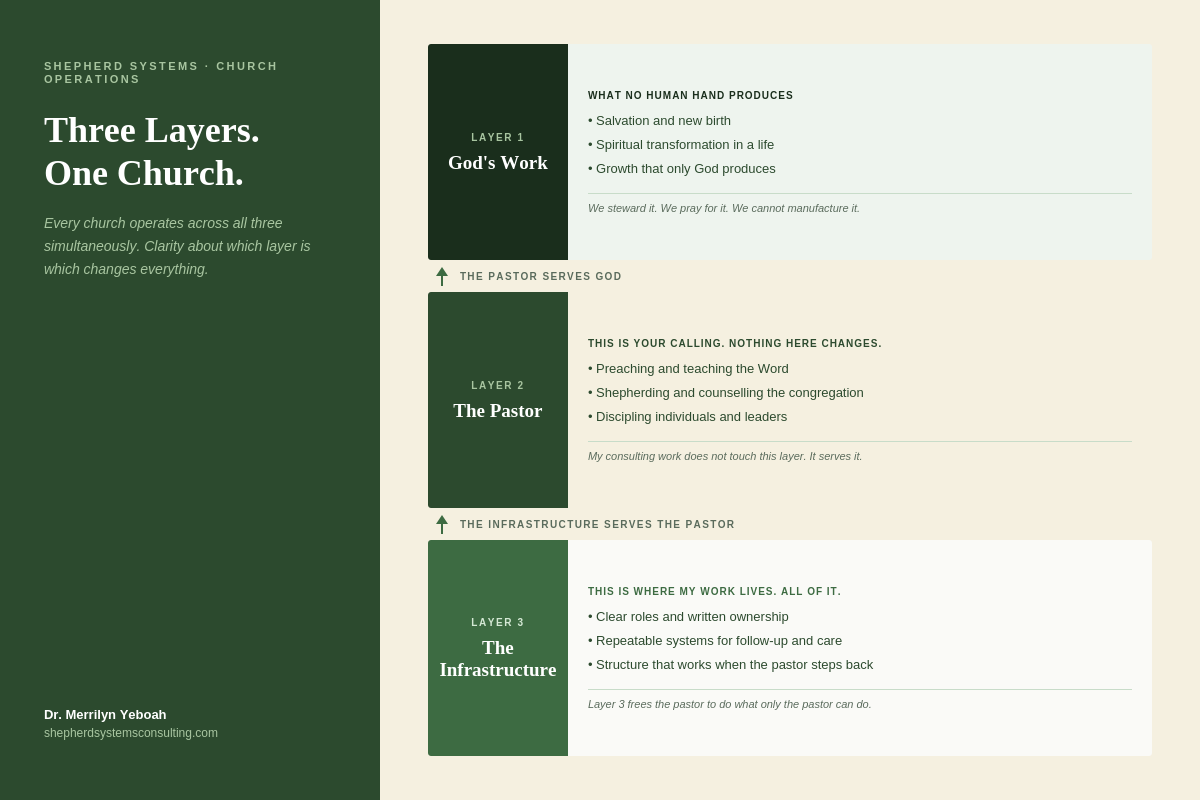
And the pastor stops being the place where everything lands by default. Because the system has a place for things to land.
That is what good stewardship of people looks like. Not just asking them to give. Building something worthy of what they give.
One honest question
Deming spent his career trying to get leaders to stop blaming people and start fixing systems. He understood that pointing at individuals is almost always a way of avoiding the harder question.
For church leaders, the harder question is this. If a passionate, gifted, willing person came into your church today and gave their best, does your church have a system that could receive it, use it, and build on it?
If the honest answer is no, that is not a reflection of your congregation's faith or your leadership's heart. It is a structural gap. Structural gaps have structural solutions.
The free self-assessment on this site is a good place to start. It takes about ten minutes and will show you exactly where those gaps are, by area, not just in general.
Shepherd Systems